The minoxidil box says “crown” and shows a picture of the top of the head. Meanwhile most men searching for help are worried about the front: the temples, the corners, the hairline creeping back. So does minoxidil work on the hairline? Yes, with asterisks. Here is what the evidence says, what to expect, and how to apply it to the front without ending up with fuzz on your forehead.
Why the label only says crown
The original trials that got minoxidil approved measured hair counts in a one inch circle on the crown, because that is the easiest spot to count hairs consistently. The label reflects what was tested, not where it stops working. Later studies and decades of clinical use show minoxidil acts on any follicle that still has life in it, front included.
What the evidence says about the hairline
- A 2016 study of 5% foam measured the frontal scalp specifically and found significant increases in hair count at the front after 24 weeks, comparable to crown results in earlier trials.
- Dermatology reviews consistently list minoxidil as first line for both vertex (crown) and frontal thinning in men and women.
- The honest caveat: temples respond less than the crown on average. The temple follicles are usually the first to go and the most sensitive to DHT, so by the time they are visibly receding, many are already miniaturized past the point of rescue.
Rule of thumb: if you can still see fine, short hairs in the area under bright light, minoxidil has something to work with. Smooth shiny skin with no fuzz means the follicles are likely gone, and no topical will bring them back.

Realistic expectations for the front
- Thickening of what is there: very likely. Thin, wispy hair at the front gets denser.
- Filling in recently thinned corners: likely if the recession is under two to three years old.
- Moving the hairline forward to where it was at 18: rare. Be suspicious of any product that promises it.
- Stopping further recession: minoxidil slows it, but it does not address DHT. For that, the conversation is finasteride, which we cover in our minoxidil and finasteride guide.
How to apply minoxidil to the hairline
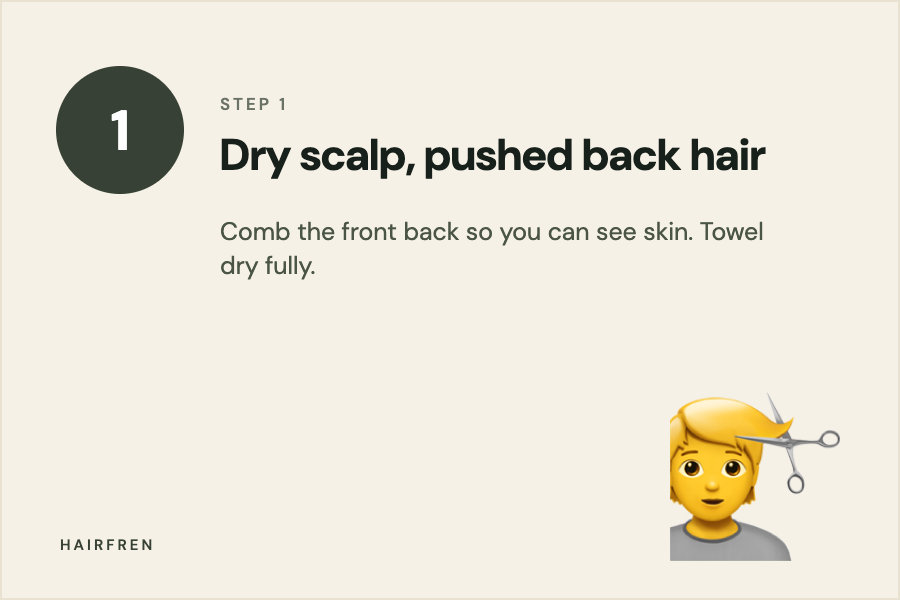
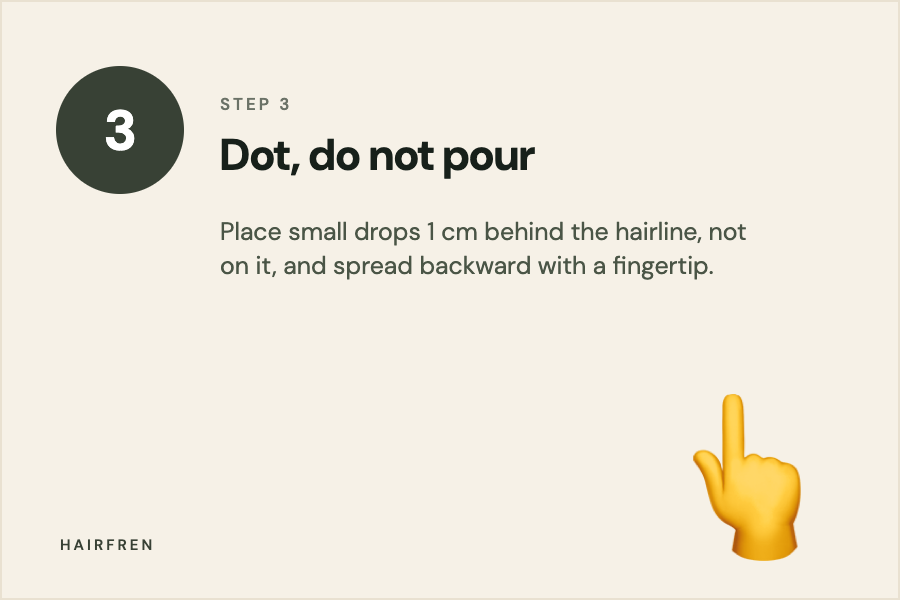
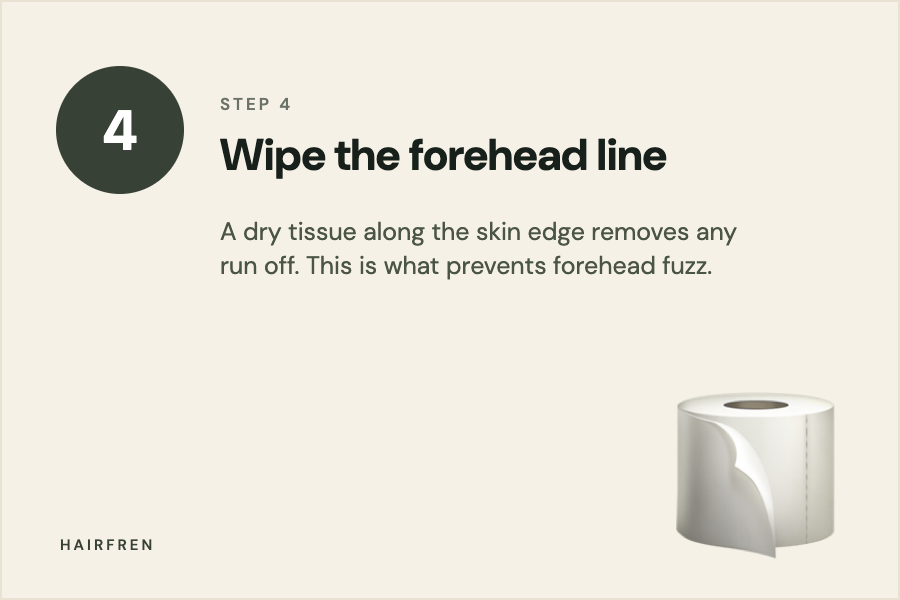
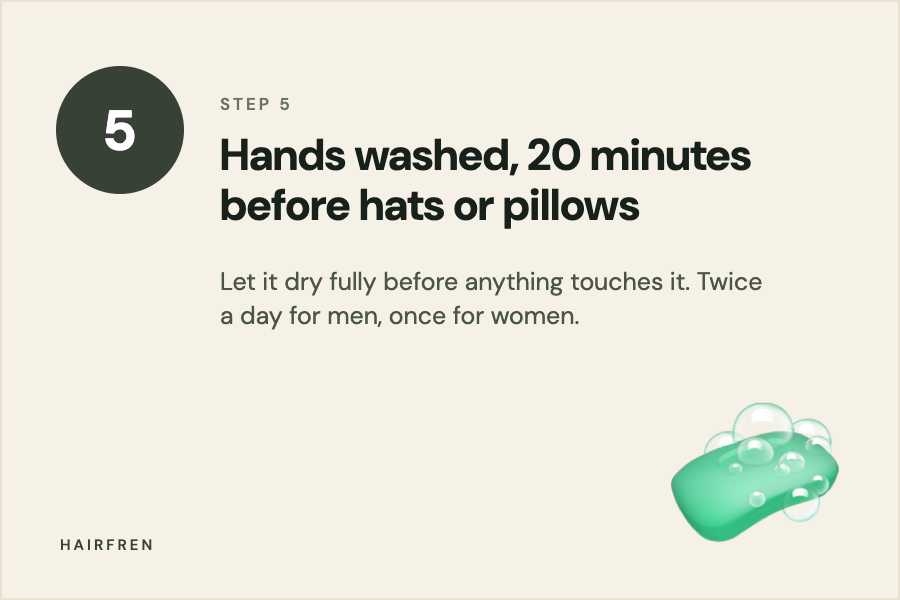
The front is harder than the crown for one reason: gravity. Liquid runs down onto the forehead, and minoxidil on skin grows hair on skin. The steps below are about getting it onto the scalp and keeping it off your face.
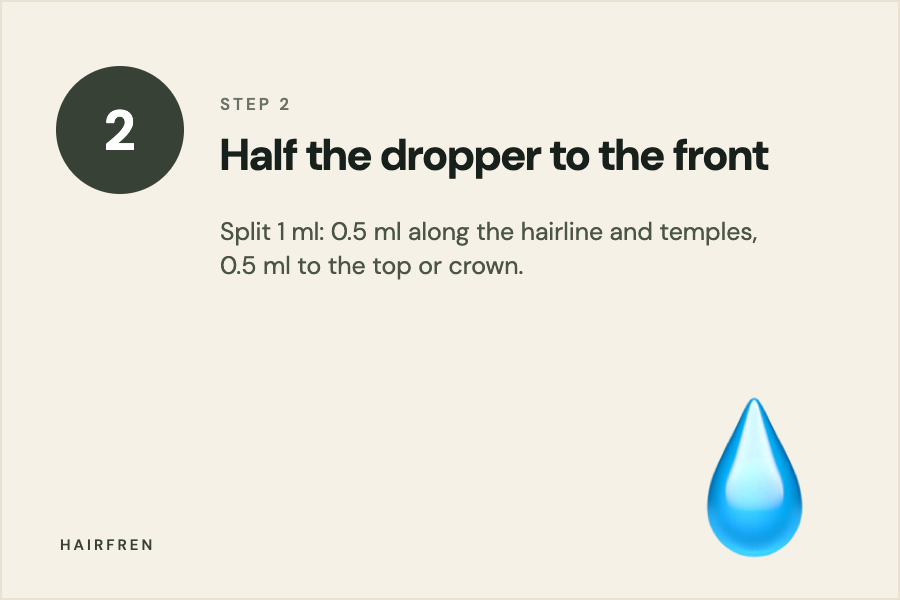
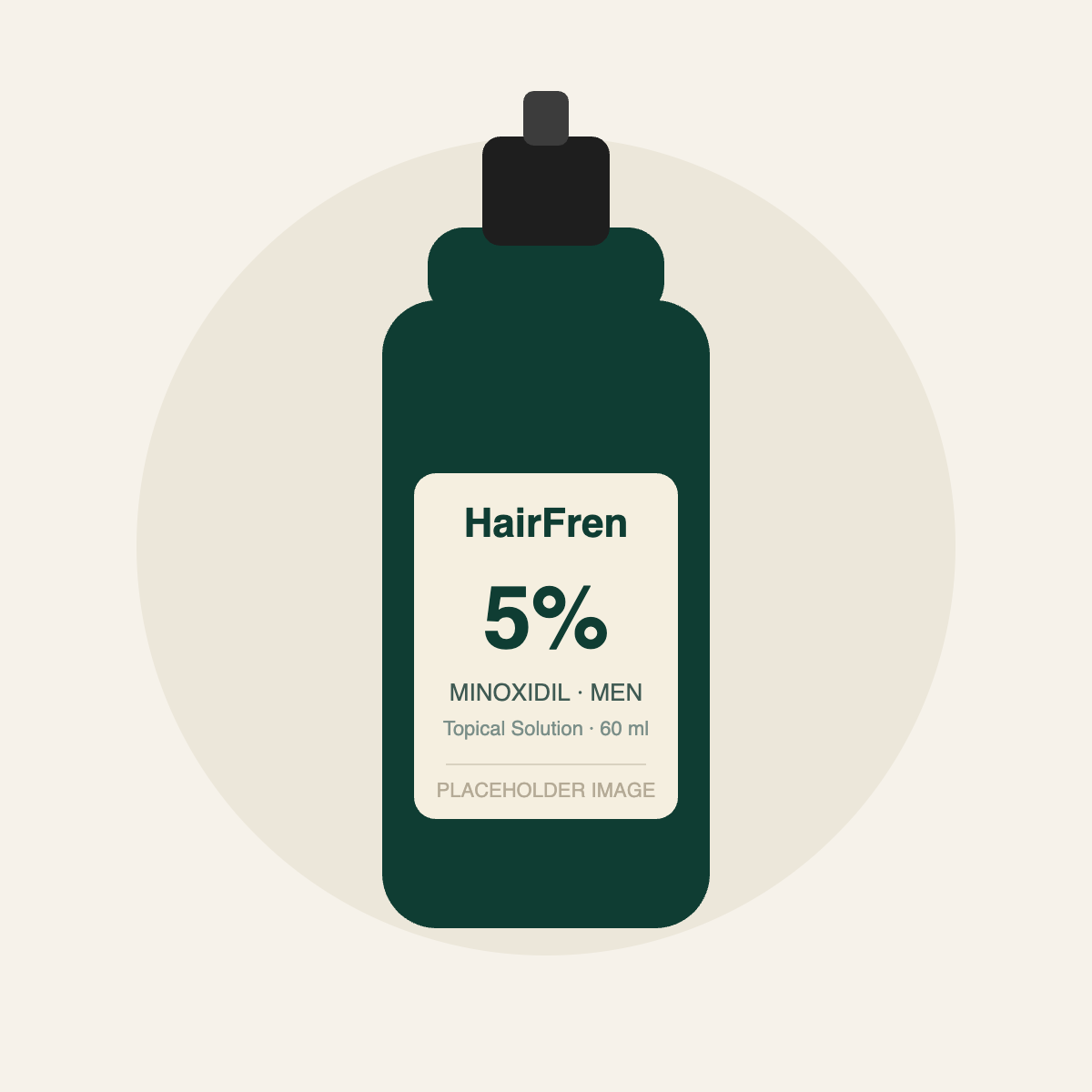
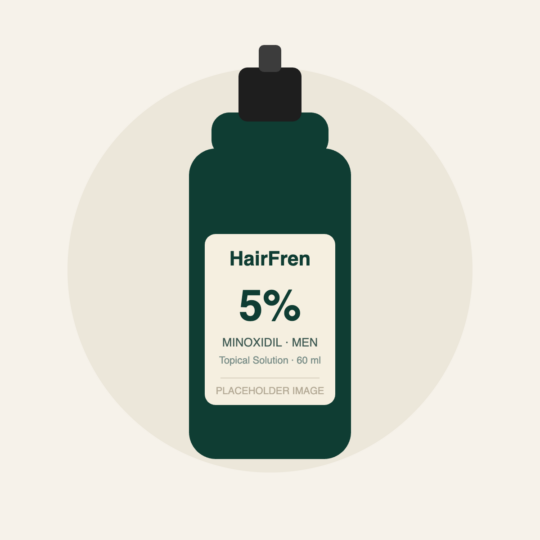
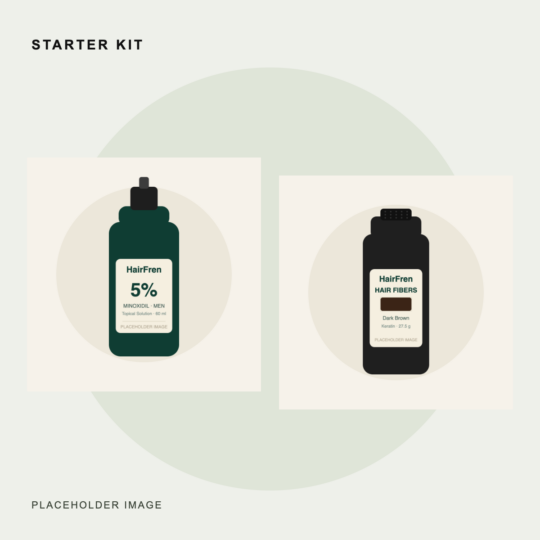
5% minoxidil solution with a marked dropper. Split the dose between front and crown. 30 day money back guarantee.
Liquid or foam for the hairline?
Both work. Foam is less likely to run onto the forehead, which makes it popular for the front. Liquid is easier to dose precisely and reaches the scalp through hair better. If you choose liquid, the “dot and spread backward” step above is what keeps it in place. If you keep getting forehead fuzz with liquid, switch the front to foam and keep liquid for the crown.
Women and the frontal hairline
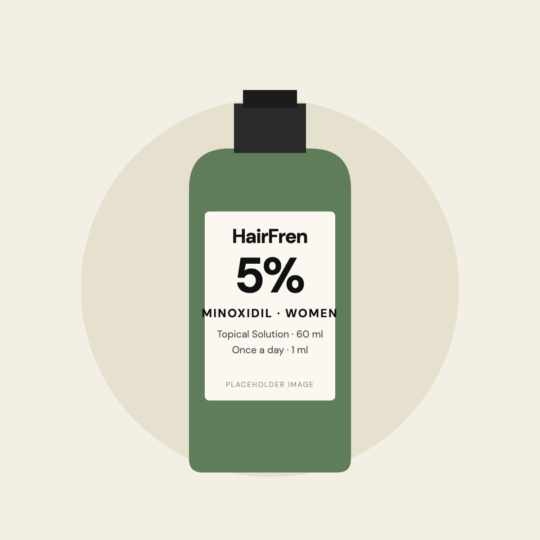
Women’s pattern hair loss usually widens the part and thins the top rather than receding the hairline, and the labeled dose is once a day. Frontal fibrosing alopecia, a different condition that does recede the hairline in women, needs a dermatologist and does not respond to minoxidil alone. If your hairline is moving back and you are a woman, see a dermatologist before starting anything. Our 5% minoxidil for women is for pattern thinning on the top of the head.
Covering the front while you wait
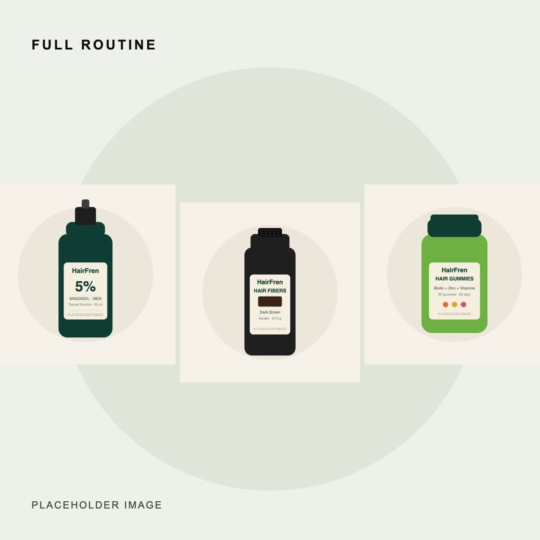
Results take four to six months. For the in between, keratin hair fibers cling to the thin hairs at the hairline and make the front look full the same day. Apply them after your minoxidil has dried. Our fibers guide covers shade matching and the hairline technique.
Video: applying to the temples without forehead run off (60 seconds)Frequently asked questions
Does minoxidil work on a receding hairline?
Yes, if the follicles are still there. Studies measuring the frontal scalp show hair count increases similar to the crown. Temples respond less on average because those follicles miniaturize first.
Why does the minoxidil label say crown only?
Because the approval trials counted hairs on the crown. It is what was measured, not a limit on where it works.
Can minoxidil regrow temples?
It can thicken fine hairs at the temples and fill recent recession. It cannot bring back follicles that are already gone, which shows as smooth skin with no fuzz.
How do I stop minoxidil growing hair on my forehead?
Apply 1 cm behind the hairline, spread backward, wipe the skin edge with a dry tissue, and let it dry before hats or pillows. Foam runs less than liquid.
Liquid or foam for the hairline?
Both work. Foam runs less, liquid doses more precisely. Many men use foam on the front and liquid on the crown.
This article is for general information and is not medical advice. Minoxidil’s label covers the crown; frontal use is common practice but off label. Talk to a clinician if your hairline changes quickly or you have scalp symptoms.