If you read about hair loss for more than ten minutes you will run into the same two names: minoxidil and finasteride. They are the only two treatments with FDA approval for hereditary hair loss, and they work in completely different ways. That is exactly why so many men use both. Here is what each one does, what the combination studies show, and how to start without wasting six months.
Two different jobs
Minoxidil is a topical you put on the scalp. It widens blood vessels around the follicle, pushes more follicles into the growth phase, and keeps them there longer. Think of it as the gas pedal: it makes existing follicles produce thicker, longer hair. It does nothing about the cause of the loss.
Finasteride is a daily pill (1 mg) that blocks the enzyme that turns testosterone into DHT. DHT is the hormone that shrinks follicles in men with pattern hair loss. Finasteride lowers scalp DHT by around 60 to 70 percent. Think of it as the brake: it slows or stops the shrinking, so the hair you have stays.
Gas pedal plus brake. One grows, one protects. That is the whole logic of the combination.
What the studies say about using both
- A 2015 trial in men with pattern hair loss compared 5% minoxidil alone, finasteride alone, and both. The combination group had the highest rate of improvement, with over 90 percent of men showing some regrowth versus roughly 60 to 80 percent on either alone.
- Long term finasteride data (5 and 10 year studies) show most men hold their hair or improve, while untreated men keep losing. That protection is what minoxidil alone cannot give you.
- A 2020 review pooled the available combination studies and concluded that using both is more effective than either alone, with no new side effects from combining them.
Plain English: minoxidil alone usually gives you a visible bump in density in the first year. Finasteride alone usually holds the line. Together you get the bump and you keep it.
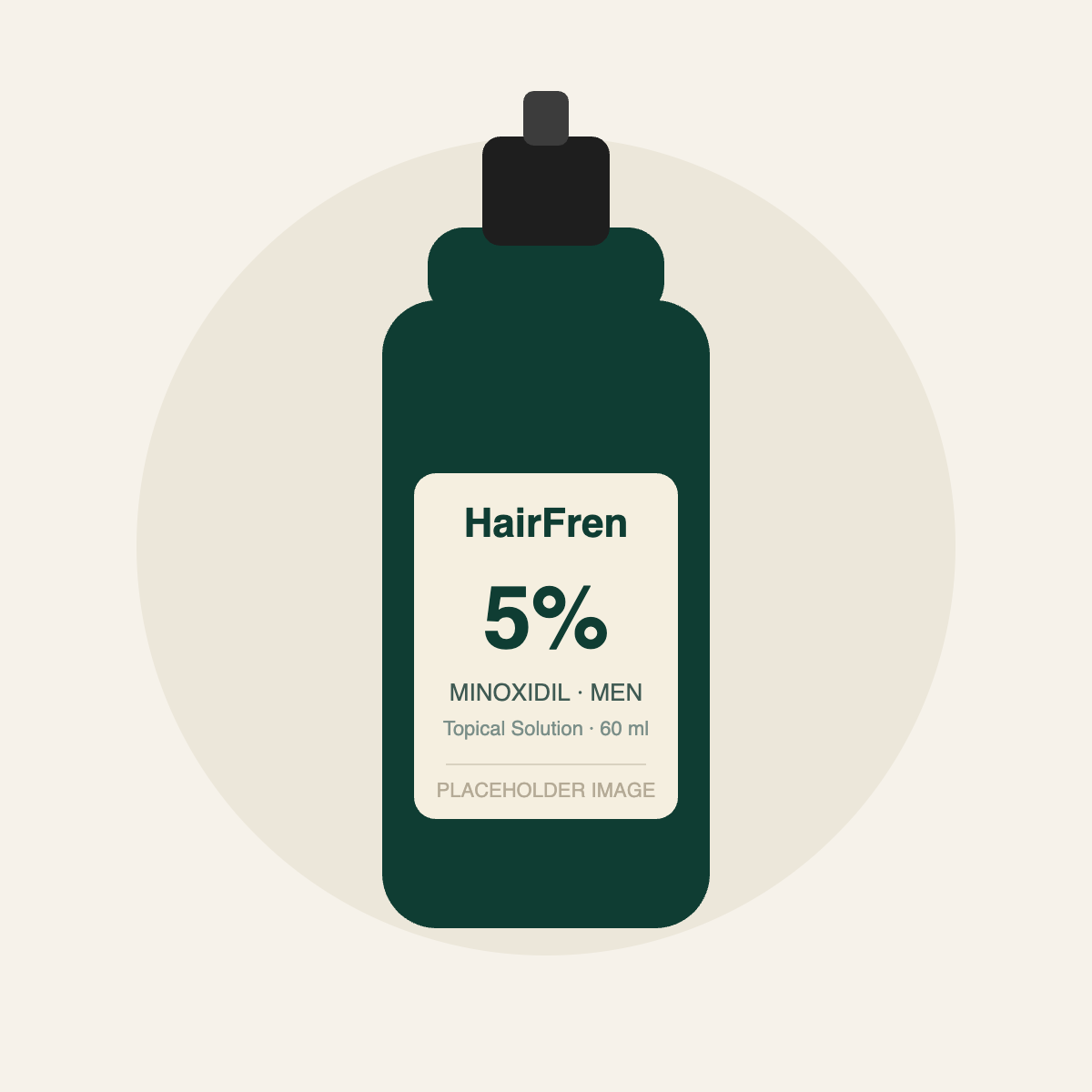
5% minoxidil for men, the FDA approved strength, 60 ml for a month. Ships from Texas in 1 to 2 days. Crypto checkout.
How to start both the right way
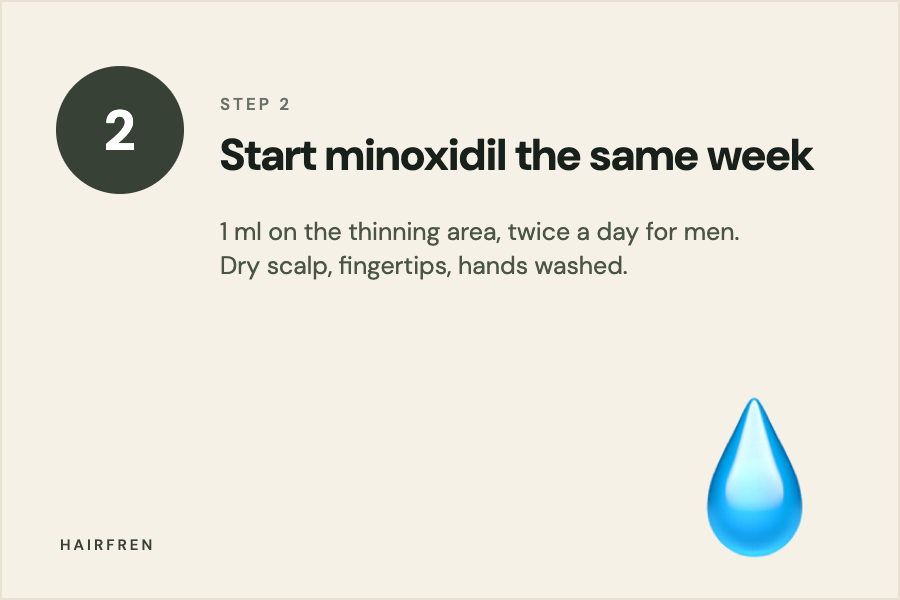
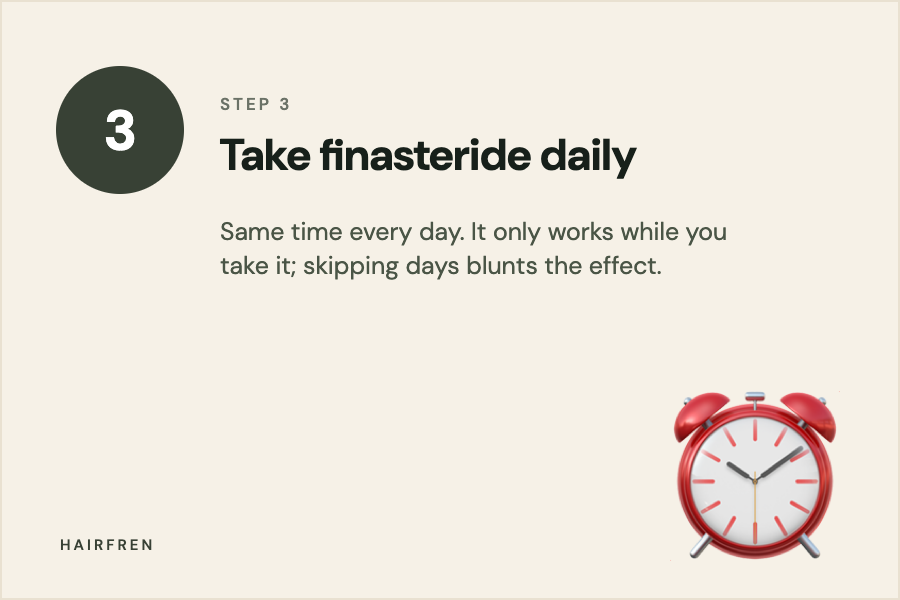
Finasteride is a prescription medicine, so the order of operations matters. We sell minoxidil; we do not sell finasteride and we do not recommend buying it from a site that skips the prescription.
The timeline, honestly
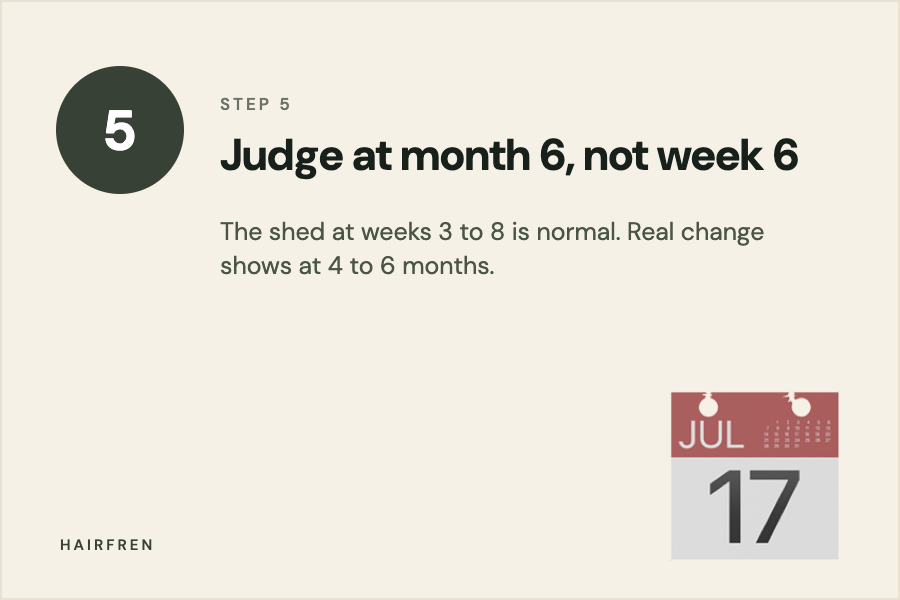
- Weeks 2 to 8: the minoxidil shed. More hair in the drain. This is old, weak hair being pushed out by new growth. It is the number one reason people quit. Do not quit.
- Months 3 to 4: shedding settles. Fine, light hairs appear in thin areas under bright light.
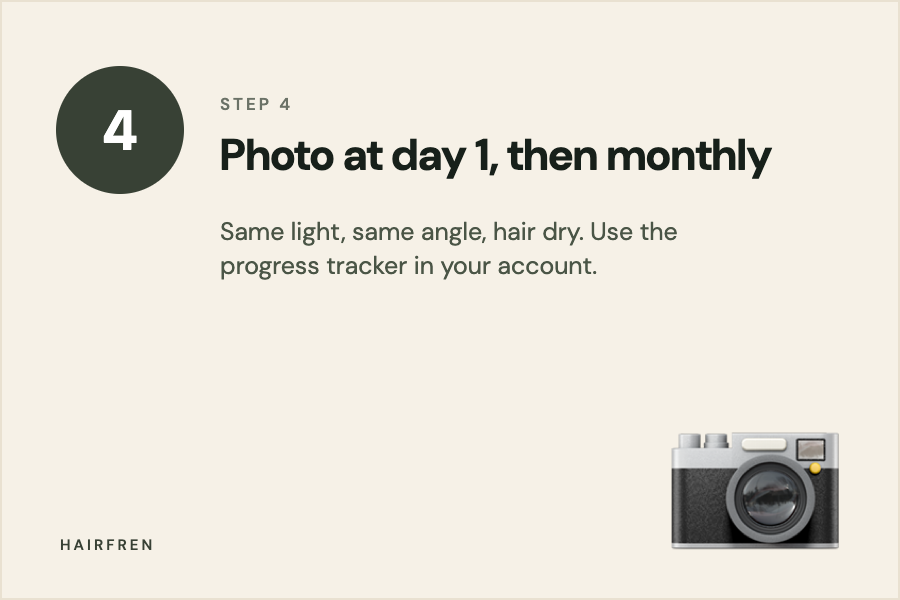
- Months 6 to 12: the new hairs thicken and darken. This is when your month 1 photo starts to look different.
- Year 2 onward: finasteride keeps doing its job in the background. Most men who stay on both keep their result for years.
Side effects, no spin
Minoxidil: scalp dryness or itching, the initial shed, and occasionally unwanted hair where the product drips (forehead, temples). Rarely dizziness or a fast heartbeat, which means stop and see a doctor. Our minoxidil side effects guide covers each one.
Finasteride: the one people worry about is sexual side effects (lower libido, erectile difficulty). In the original trials these affected about 2 to 4 percent of men versus about 1 to 2 percent on placebo, and in most cases went away after stopping or even while continuing. A small number of men report symptoms that persist; this is debated in the research and is a real reason to have the conversation with a prescriber rather than a website. Finasteride also lowers PSA readings, which your doctor needs to know for prostate screening. Women who are or may become pregnant should not handle crushed or broken tablets.
Who should not combine them
- Women: finasteride is not approved for women and is not used in pregnancy. Women with pattern hair loss should look at 5% minoxidil for women and talk to a clinician about other options.
- Anyone with a heart condition or on blood pressure medication should clear minoxidil with a doctor first.
- Men planning to conceive in the near term sometimes choose to pause finasteride; ask your prescriber.
What about 15% minoxidil instead of adding finasteride?
Different tool. High strength minoxidil is for men who gave 5% a fair run and plateaued. It still does nothing about DHT. If your loss is actively progressing, finasteride addresses the cause and a stronger minoxidil does not. Read our 15% minoxidil guide for who it is for.
Video: the 90 second version of this articleFrequently asked questions
Can I use minoxidil and finasteride at the same time?
Yes. They work by different mechanisms and the combination has been studied directly with no new interaction found. Minoxidil goes on the scalp; finasteride is a daily tablet that requires a prescription.
Which works better, minoxidil or finasteride?
For regrowth in the first year, minoxidil usually shows more. For keeping hair over years, finasteride is the one that addresses the cause. Studies that compared both found the combination beat either alone.
How long until I see results from minoxidil and finasteride?
Expect a shed in weeks 2 to 8, early fuzz at month 3 to 4, and a visible difference at month 6 to 12. Judge the result by comparing photos months apart, not day to day.
Does HairFren sell finasteride?
No. Finasteride is a prescription medicine. We sell 5% minoxidil, hair fibers and hair vitamins, and keep a waitlist for prescription strength minoxidil through a partner pharmacy.
What happens if I stop finasteride?
DHT goes back to its previous level and the hair that finasteride was protecting usually resumes thinning over the following 6 to 12 months. The same is true for minoxidil: the hair it grew depends on continued use.
This article is for general information and is not medical advice. Finasteride is a prescription medicine; talk to a licensed clinician about whether it is right for you. Read the Drug Facts label on any minoxidil product you use.