
If you are reading this, you have probably noticed something in the mirror or the shower drain. Before you panic, here is the honest list of what actually causes hair loss in men, which ones you can do something about, and which ones you cannot.
1. Your genes (male pattern hair loss)
This is the big one. Around 80 percent of men who lose hair have androgenetic alopecia, better known as male pattern baldness. Your hair follicles are sensitive to a hormone called DHT (dihydrotestosterone). Over the years DHT shrinks the follicles on the top and front of the head until they stop making visible hair. It usually shows up as a receding hairline, a thinning crown, or both.
The myth that it only comes from your mother’s side is wrong. It comes from both parents. If your dad, uncles, or grandfathers thinned early, your odds are higher.
What helps: this is the type of hair loss that 5% minoxidil is approved for. It does not block DHT, but it pushes follicles back into the growth phase and keeps them there longer. Most men see less shedding by month 2 and visible regrowth by month 4 to 6.

2. Stress (telogen effluvium)
A rough few months, a breakup, a new baby, a job loss. About 2 to 3 months after a big stressor, a lot of hair can shift into the resting phase at once and then fall out together. It looks dramatic in the shower but it is usually temporary. Hair comes back on its own in 6 to 9 months once the stress passes.
What helps: sleep, time, and not adding more stress by obsessing over it. Minoxidil can speed the regrowth, but it is not required.
3. Nutrient gaps
Hair is a low priority organ. When your body is short on iron, zinc, vitamin D, protein, or biotin, it sends what it has to your heart and brain first. Men who crash diet, skip meals, or eat mostly processed food can thin out for this reason alone.
What helps: real food first. If your diet is inconsistent, a daily supplement like our hair gummies covers the common gaps (biotin, zinc, vitamin D, B vitamins). Ask your doctor for a ferritin test if you suspect iron.
4. Thyroid problems
Both an underactive and an overactive thyroid cause diffuse thinning across the whole head, often along with tiredness, weight changes, and dry skin. This one needs a blood test and a doctor. Once the thyroid is treated, hair usually recovers.
5. Medications
Some common drugs list hair loss as a side effect: certain blood pressure medications, antidepressants, acne medications, anabolic steroids, and some cholesterol drugs. If your shedding started within a few months of a new prescription, mention it to your doctor. Never stop a medication on your own.
6. Scalp conditions
Dandruff that has gotten out of hand (seborrheic dermatitis), psoriasis, or a fungal infection can inflame the scalp enough to push hair out. The giveaway is itching, flakes, redness, or greasy scales. Treat the scalp first and the hair follows.
What helps: a medicated anti dandruff shampoo 2 to 3 times a week. If it does not clear in a month, see a dermatologist.
7. Tight hairstyles and friction (traction alopecia)
Cornrows, man buns, tight braids, and even a snug hat worn every single day can slowly pull hair out at the hairline. Early on it is reversible. After years, the follicles scar and it is not.
What helps: loosen the style, rotate, and give the hairline a break.
8. Smoking
Smoking reduces blood flow to the scalp, raises oxidative stress, and is linked in several studies to earlier and more severe pattern hair loss. It also makes minoxidil work less well, since minoxidil relies on blood flow.
9. Sudden illness, surgery, or a high fever
A bad flu, COVID, surgery with anesthesia, or any event that knocks your body down can trigger the same telogen shedding as stress. It usually shows up 2 to 3 months after and resolves on its own.
10. Autoimmune hair loss (alopecia areata)
If your hair comes out in smooth, round, coin sized patches rather than thinning everywhere, your immune system may be attacking the follicles. This is not pattern hair loss and minoxidil alone is not the main treatment. See a dermatologist; there are good options.
So which one is it?
A quick way to narrow it down:
- Receding temples or a thinning crown, slow, over years: genetics. Start minoxidil and be consistent.
- Thinning everywhere at once, started 2 to 3 months after a hard time: stress or illness shedding. It will likely recover.
- Thinning plus tiredness, weight change, dry skin: get a thyroid and iron panel.
- Itchy, flaky, red scalp: treat the scalp.
- Smooth bald patches: dermatologist.
Most men fall into the first bucket. The good news is that it is the most treatable one, as long as you start before the follicles are gone. The hair you still have is much easier to keep than hair you have lost is to regrow.
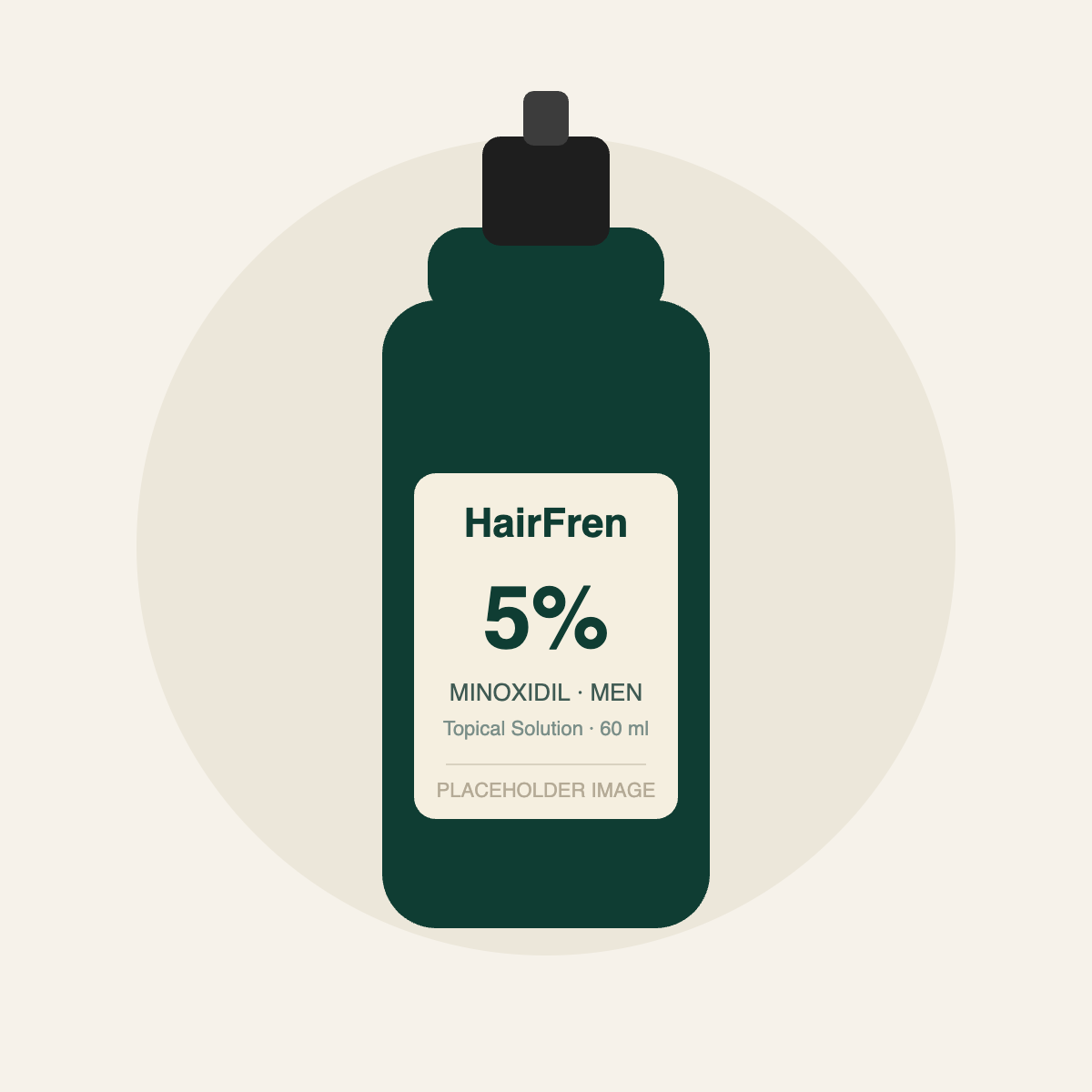
The FDA approved over the counter option for male pattern hair loss. Twice a day, 1 ml, on a dry scalp. Results in 4 to 6 months.
What about stronger strengths?
You may have seen 10% or 15% minoxidil online. Those are prescription strength and are compounded by licensed pharmacies. We do not sell them, but we keep a waitlist for a partner pharmacy option. Start with 5% first. Most men never need more.
This article is for general information and is not medical advice. Talk to a doctor or pharmacist about your own situation, and read the Drug Facts label on any product you use.