Minoxidil has been over the counter since 1996 and used by tens of millions of people, so its side effects are well mapped. Most are mild, local, and fixable with a change of technique. A few are signals to stop. The problem is that the label lists them all in the same small print. This guide sorts them: what is normal, what to fix, and what means stop today.
Why minoxidil causes side effects at all
Two reasons. First, the solution is mostly alcohol and propylene glycol, which dry and irritate skin. Most “minoxidil side effects” are really “solution side effects.” Second, minoxidil was originally a blood pressure pill. Only a small amount of a topical dose is absorbed into the bloodstream (around 1 to 2 percent), but in sensitive people, or with too much product, or on broken skin, that can be enough to notice.

Normal: ride it out
The shed (weeks 2 to 8)
The most common and most alarming. Minoxidil pushes resting follicles into a new growth cycle, and the old hair falls out to make room. You lose hair you were going to lose anyway, just faster and all at once. It peaks around week 4 to 6 and settles by month 3. Stopping during the shed is the single most common way people fail. Our shedding timeline covers it week by week.
Dry, itchy, flaky scalp
Affects roughly 5 to 7 percent of users in trials, probably more in real life. Almost always the propylene glycol and alcohol. Fixes: a gentle fragrance free shampoo, a longer rinse, a plain moisturizer on the scalp at night, or switching to foam, which has no propylene glycol. See our shampoo guide.
Mild redness or warmth where applied
Normal in the first weeks as skin adjusts. If it becomes raw, weeping or spreads beyond where you apply, that is contact dermatitis and needs a dermatologist.
Fix the technique
Unwanted hair (forehead, temples, cheeks, hands)
Minoxidil grows hair wherever it lands. Fuzz at the forehead edge comes from run off, hairy knuckles from not washing hands, cheek hair from a pillow with wet product on it. Fixes: apply a centimeter behind the hairline, wipe the skin edge with a dry tissue, wash hands immediately, let it dry 20 minutes before bed. Hair that grew where you did not want it falls out within a couple of months of fixing the cause.
Hair texture change
Some users notice new hair comes in finer or a slightly different texture. This is new hair in its early cycles; it usually normalizes. Dryness from the solution can also make existing hair feel coarse, which conditioner on the lengths fixes.
Reduce and watch
Headache, mild lightheadedness
Reported by a small minority. Usually from absorbing a bit more than typical. Check the dose (1 ml, not a generous pour), avoid applying to broken or sunburned skin, and try once a day for a week. If it does not clear, stop and talk to a doctor.
Dark circles or puffiness under the eyes
Mostly reported by people applying near the face (beard use, hairline). Likely product migration and mild fluid retention. Keep it away from the face and it resolves.
Stop now and see a doctor
These are the signs that too much minoxidil is reaching your bloodstream. They are uncommon but not to be ignored:
- Fast or irregular heartbeat, palpitations.
- Chest pain.
- Swelling of the hands, feet or face, or sudden weight gain.
- Fainting or severe dizziness.
- Trouble breathing.
Stop applying and see a doctor the same day. People with heart conditions, on blood pressure medication, or over 65 should check with a doctor before starting at all.
The five most common issues and what to do


Every bottle ships with a marked 1 ml dropper and the full Drug Facts label. Questions about a reaction? Email hello@hairfren.com.
Side effects specific to women
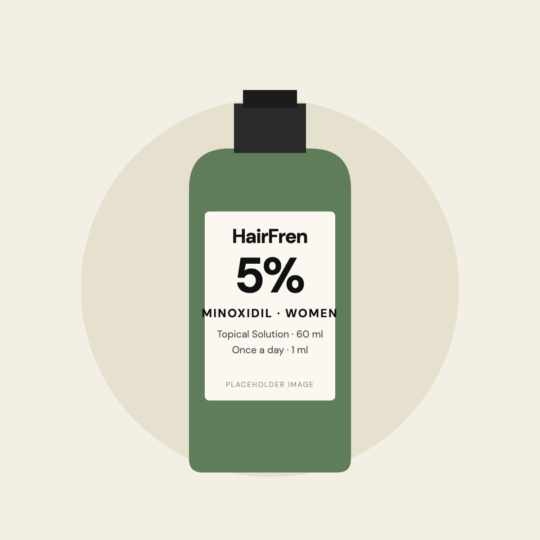
Women are more prone to unwanted facial hair, which is why the labeled dose for women is once a day and why higher strengths are not routinely used. Minoxidil is not for use during pregnancy or breastfeeding. Our 5% minoxidil for women page and women’s guide cover the once daily routine.
Pets and children
Minoxidil is highly toxic to cats and dogs, even from licking a pillow or a hand. Keep bottles closed and out of reach, wash hands, and let your scalp dry before contact with pets. Keep it away from children entirely.
Does 15% minoxidil have more side effects?
Yes, in proportion. Studies on 10% and 15% strengths report more irritation, more unwanted hair, and more reports of heart rate changes. That is why they are prescription only. Our 15% minoxidil guide covers who it is for.
Video: the shed explained in 60 secondsFrequently asked questions
What are the most common side effects of minoxidil?
Scalp dryness and itching, a temporary shed in weeks 2 to 8, and unwanted hair where the product runs. All are local and fixable. Whole body effects like a racing heart or swelling are uncommon and mean stop.
Is minoxidil shedding normal?
Yes. It peaks around week 4 to 6 and settles by month 3. It is old hair being replaced by new growth. Keep applying.
Why does minoxidil make my scalp itch?
The alcohol and propylene glycol in the solution. A gentle shampoo, a longer rinse, moisturizer at night, or switching to foam usually fixes it.
When should I stop using minoxidil?
Stop and see a doctor for a fast or irregular heartbeat, chest pain, swelling of hands or feet, fainting, or trouble breathing. Also stop for a raw, spreading rash.
Does minoxidil affect blood pressure?
Topical minoxidil absorbs only about 1 to 2 percent into the bloodstream, which does not change blood pressure in most people. Those on blood pressure medication or with heart conditions should ask a doctor first.
This article is for general information and is not medical advice. Read the Drug Facts label. If you have a reaction that worries you, stop and talk to a clinician or pharmacist.