Hair loss in women is more common than anyone talks about. Around 40 percent of women notice visible thinning by age 50, and plenty start in their 20s and 30s. It is also different from men’s hair loss in how it looks, why it happens, and what works. Here is the clear version.
How it looks different
Men recede at the temples and lose the crown. Women usually keep their front hairline but thin out across the top and the part. The classic sign is a part that keeps getting wider, or a ponytail that feels half as thick as it used to. Dermatologists call this female pattern hair loss, and it is the most common type.

The main causes
1. Female pattern hair loss (genetics plus hormones)
The same follicle sensitivity to androgens that causes male pattern baldness, but more diffuse. Family history on either side raises your odds. It tends to get more noticeable after menopause, when estrogen (which protects hair) drops.
2. Postpartum shedding
During pregnancy, high estrogen keeps hair in the growth phase, so you shed less and hair feels thick. Around 3 months after birth, all that held back hair sheds at once. It is alarming, it is normal, and it recovers on its own by about a year.
3. Iron deficiency
The single most overlooked cause in women. Heavy periods, pregnancy, and plant based diets all drain iron stores. Hair follicles need ferritin (stored iron) above about 40 to 70 ng/mL to grow well, which is higher than the “normal” lab cutoff. Ask your doctor to check ferritin specifically, not just hemoglobin.
4. Thyroid
Thyroid disorders are 5 to 8 times more common in women, and both high and low thyroid cause diffuse shedding. If your hair loss comes with fatigue, cold hands, weight change, or dry skin, get a TSH test.
5. PCOS and hormone shifts
Polycystic ovary syndrome raises androgens, which can thin scalp hair while increasing facial or body hair. Starting or stopping birth control, perimenopause, and menopause can all trigger shedding too.
6. Stress and crash dieting
A hard season of life, a very low calorie diet, or a sudden drop in protein can push a large share of hairs into the resting phase. The shed shows up 2 to 3 months later and recovers once the trigger is gone.
7. Styling damage
Tight ponytails, braids, extensions, and heavy heat styling cause traction alopecia and breakage along the hairline and temples. Early on it is reversible.
What actually works
Minoxidil, once a day
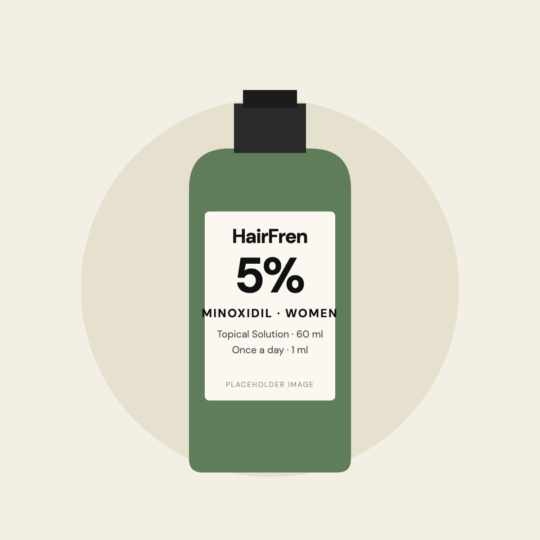
Minoxidil is the only FDA approved over the counter treatment for female pattern hair loss. Once a day, 1 ml with the dropper, on a dry scalp along the part and wherever you are thinning. The 5% strength once a day is what most dermatologists now recommend for women. Expect a shed in the first 2 months, fine regrowth by month 3 to 4, and visible density by month 6.
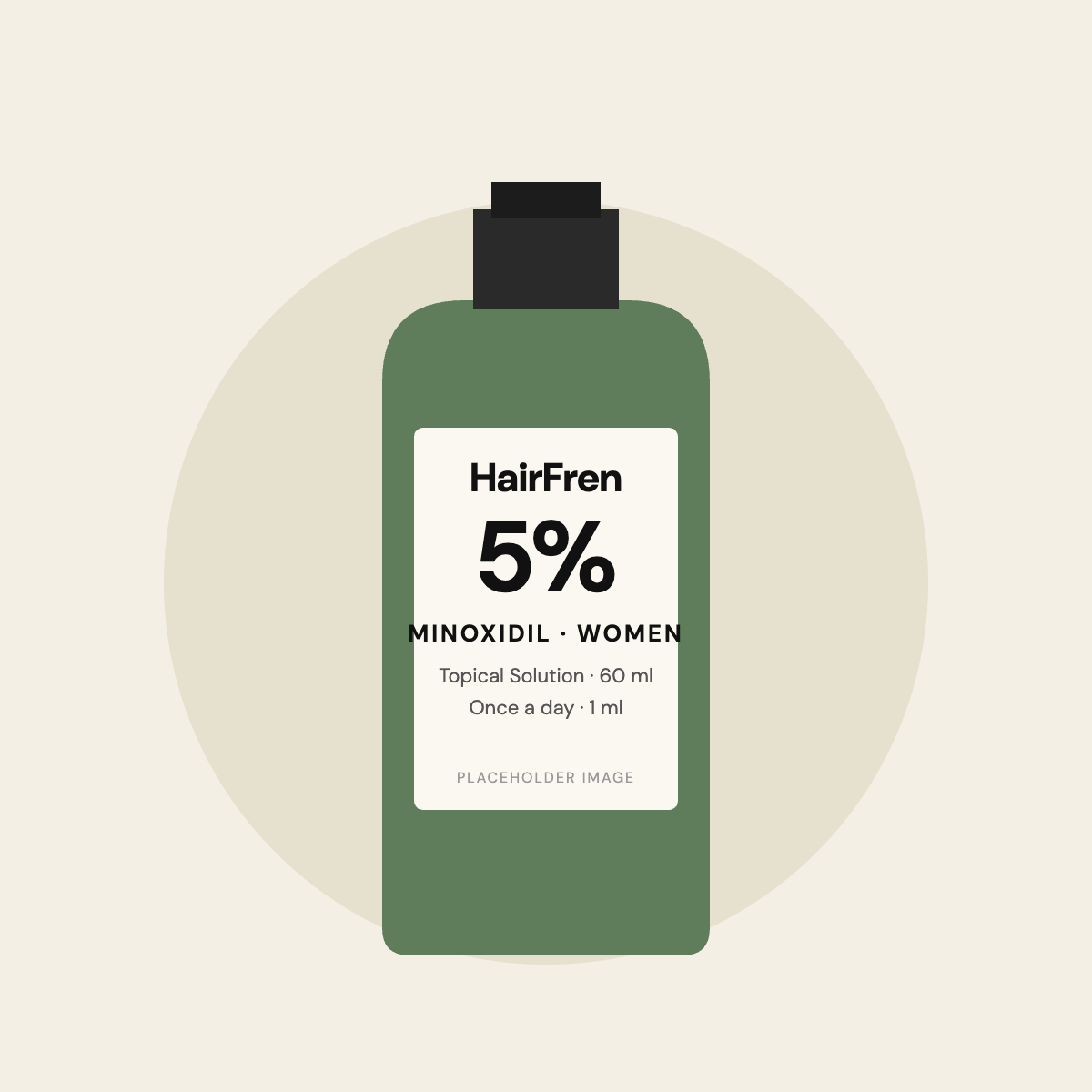
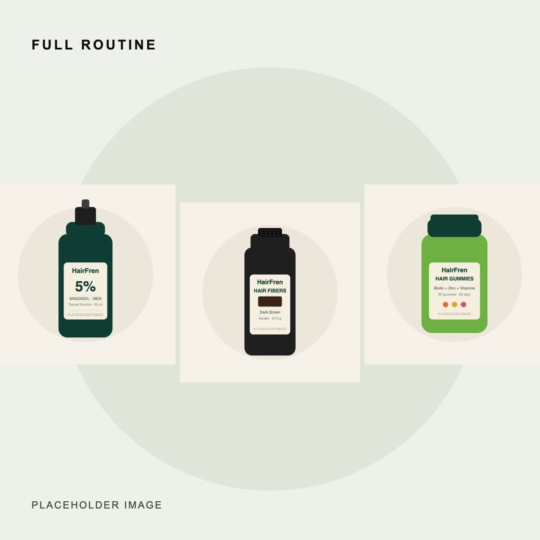
Once a day along the part, exact 1 ml dropper, unscented and light. 60 ml, about a 2 month supply.
Fix the inputs
If ferritin, vitamin D, zinc, or protein are low, no topical will fully work. A daily hair supplement with biotin, zinc, and vitamin D covers the common gaps. Iron should be dosed by a doctor after a test, because too much is harmful.
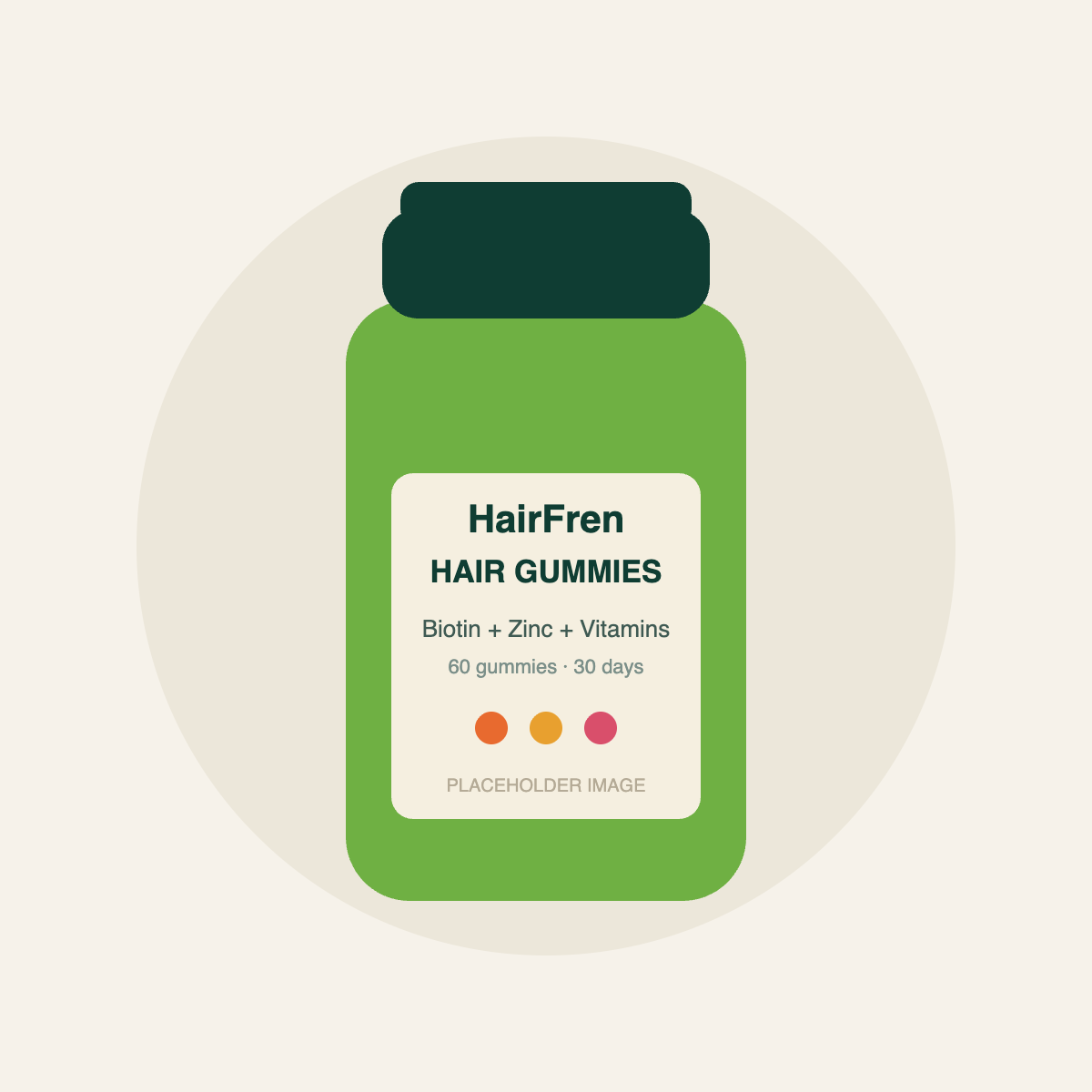
Biotin, zinc, vitamin D and B vitamins in a daily gummy. 60 count, 30 day supply.
Be gentle with what you have
- Loosen tight styles and alternate the position of your ponytail or part.
- Heat protectant every time, and fewer heat days.
- Sleep on silk or satin to reduce friction.
- Wash as often as your scalp needs. Skipping washes does not reduce shedding; those hairs were already loose.
Cover the part while you wait
Regrowth takes months. Hair fibers are a 10 second fix for a visible part or thin crown that holds all day and washes out at night. Many women use them daily during the first 6 months of minoxidil.
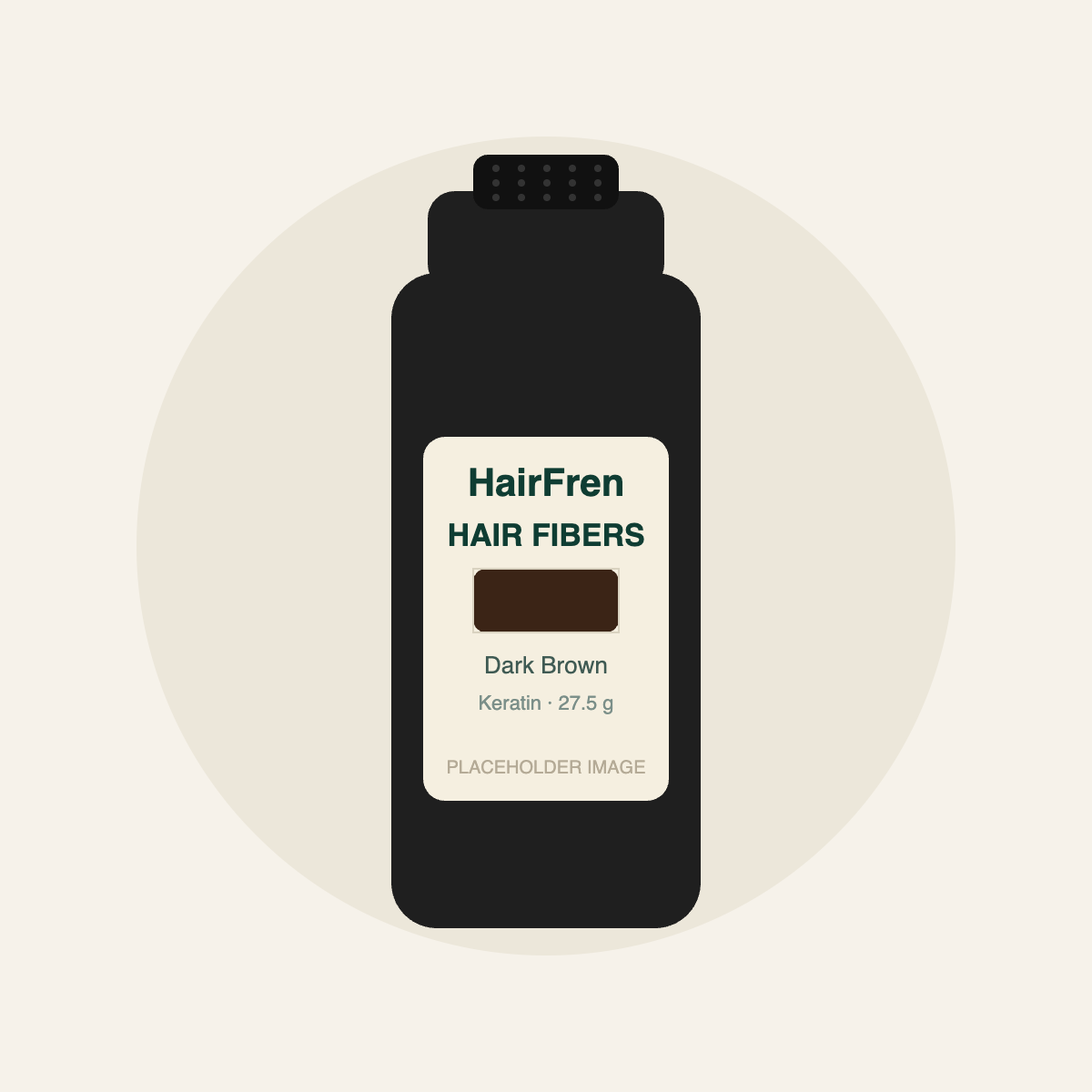
9 shades. Shake over the thin area, pat, done. Rain and sweat resistant, washes out with shampoo.
What about 3% or other prescription options?
Some dermatologists prescribe lower strength compounded minoxidil (for example 3%) for women who find 5% too irritating, or add oral medications for hormone related hair loss. These require a prescription and a licensed pharmacy. We do not sell them, but we keep a waitlist for a partner pharmacy option.
When to see a doctor
Sudden, patchy, or very fast hair loss. Hair loss with scalp pain, redness or scarring. Hair loss along with irregular periods, acne, or facial hair. Or if 6 months of consistent minoxidil has done nothing. A dermatologist can run the right tests and get you on a plan.
This article is for general information and is not medical advice. Talk to a doctor or pharmacist about your own situation, and read the Drug Facts label on any product you use.